Entradas

MARIA ALTMANN EN BUSCA DE LA DAMA DE ORO

Imagen
Durante la II Guerra Mundial, el régimen nazi expolio una ingente cantidad de obras de arte en cada uno de los países que iba invadiendo. Entre 1933 y 1945, se estima que llegaron a robar alrededor de 600.000 obras de arte, principalmente en Austria y Europa del este (los países que más sufrieron esta contienda). Uno de los casos más mediáticos es el de Maria Altmann (1916-2011), la coleccionista de arte austriaco-estadounidense y protagonista de la película  La dama de oro  (2015). A finales de los noventa, Altmann (Helen Mirren) se embarca en una titánica lucha contra el gobierno austriaco para recuperar los cuadros que el conocido pintor  modernista Gustav Klimt había pintado para su familia, entre ellos La dama de oro (1907) el icónico retrato de su tía Adele Bloch-Bauer. Paraello, la anciana coleccionista cuenta con la inquebrantable ayuda del joven abogado Randy Schoenberg (Ryan Reynolds) durante los casi diez años que duró la batalla legal. En 2004, el caso ...

ARS ELECTRONICA FESTIVAL 2020: NOT DESPITE BUT BECAUSE OF CORONA

Imagen
  This year´s Ars Electronica Festival “was taking place not despite but because of Corona”. A very strong statement that symbolizes the current situation of art and culture around the world. Even though, both sectors have been extensively affected because of the pandemic, it is also true that it has not been the first (and will not be the last) crisis to hit the creativity of artists around the world. Therefore, we have two options: either, we stop all activities and wait until this  storm  has passed or we fight it back. I am staying with the second option and it looks that the big festivals too. Not only Ars Electronica, but RIBOCA or the Venice Biennale have adapted their programs towards the impact of COVID-19 in order to continue its existence, as well as to stay relevant within the present situation. In this  41º edition, the world´s leading media art event asked the question what to do now regarding humanity, ecology, uncertainty, technology and democrac...

LA “PECULIAR” HISTORIA DE ESPAÑA DE ARTURO PÉREZ-REVERTE

Imagen
  Durante cuatro años, el conocido escritor español Arturo Pérez-Reverte fue escribiendo por fascículos su particular historia de España en su columna  Patente de Corso  del XL Semanal. Y un año después, la editorial Alfaguara recopiló los 91 capítulos de las que está compuesta este relato personal e incluso irónico de nuestros antepasados mediante una perspectiva poco optimista. Este verano, he tenido la oportunidad de poder leer  Una Historia de España  (2018) y he de admitir, que la visión ácida de su autor es perfectamente comprensible. Si bien es cierto, que ya conocía gran parte de los episodios de la historia de nuestro país, siempre los había leído en volúmenes diferentes y a menudo, consistentes. Sin embargo, Pérez-Reverte condensa siglos de acontecimientos en apenas 300 páginas. A la vuelta de cada página el lector va conectando cada acontecimiento, desde nuestros orígenes hasta poco después de la Transición, llegando a la conclusión de que los español...

THE MUSEUM OF ROMANS SUTA AND ALEKSANDRA BELCOVA

Imagen
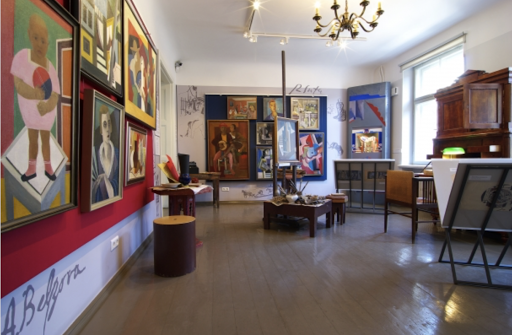
  Romans Suta (1896-1944) and Aleksandra Belcova (1892-1981) were two of the most relevant artists of the first half of the 20 th century´s Latvian Art. They meet each other in Penza, home of the Penza School of Art, a key art hotspot in the defunct Russian Empire. They married in Riga in 1922 and a year later, their daughter Tatjana was born. She was a ballerina of the Latvian National Ballet for two decades as well as an art historian, who committed to organize her parents artistic legacy. She was in charge to organize their joint 4.000 works as well as to accommodate the family apartment to become a museum itself. After her death in 2004, an inventory of that collection had to be held alongside some restoration work. But nevertheless, her commitment towards Suta´s and Belcova´s legacy paid off in October 2008, when the museum opened its doors to the public. I was lucky enough to visit it last week, and, to admire the works of two of the most representative figures of classical m...

RIBOCA2: AND SUDDENLY IT ALL BLOSSOMS

Imagen
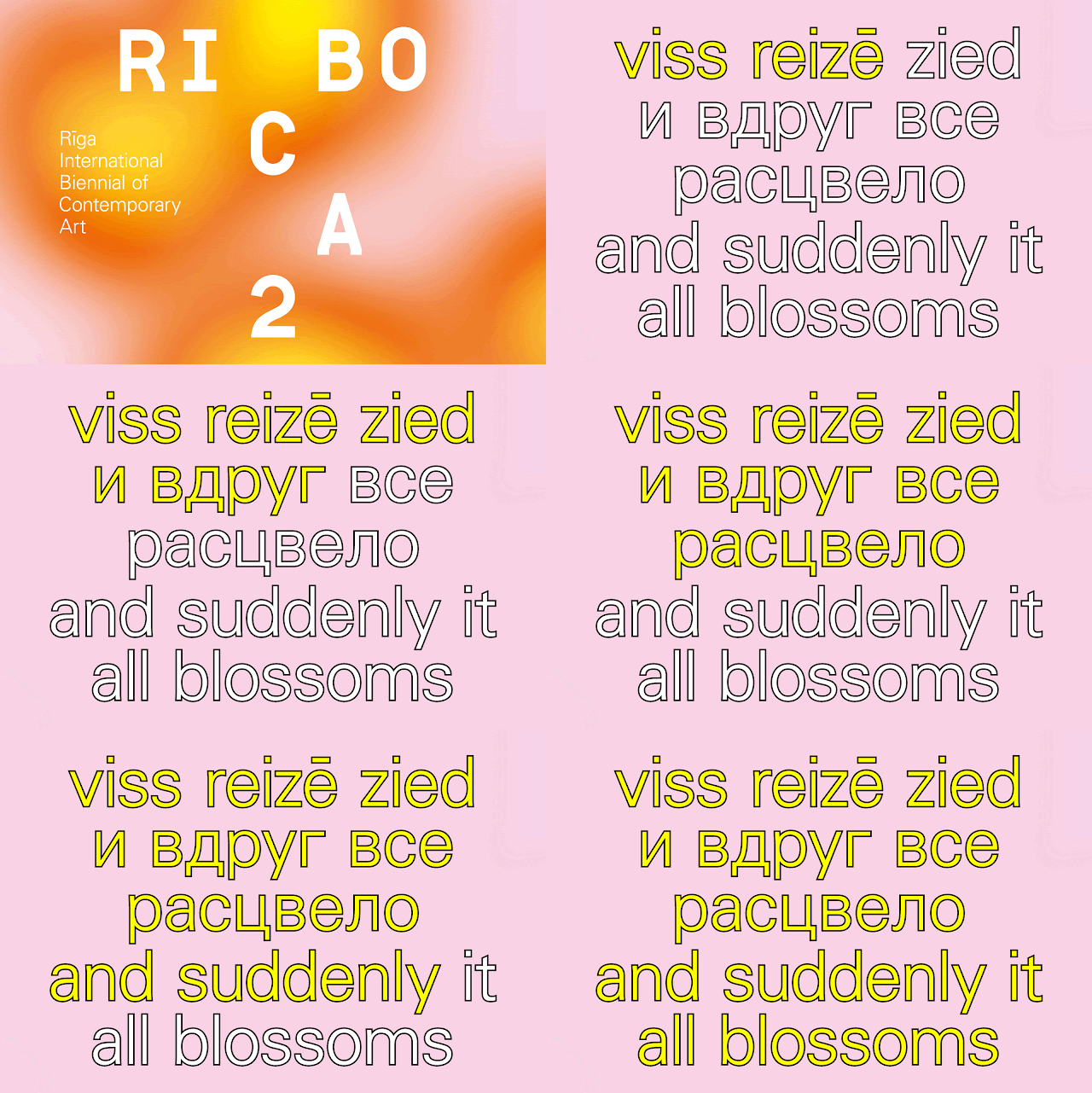
Last week I attended the 2 nd   Riga International Biennial of Contemporary Art:   and suddenly it all blossoms . Even though it was planned to open on 16 May 2020, the Covid-19 pandemic changed it all. Therefore, instead of being a five-month biennial, it became a three-week show. As well, it had been planned to include 85% of new commissions. Nevertheless, RIBOCA transformed itself into a film set, where the audience became part of the feature movie that will be released in early 2021. In spite of the fact that I understood Rebeca Lamarche-Vadel´s concept of reinvention in the end of “a” world, where the audience walks through the 200.000 m2 of the Tarkovskian former port Riga´s district of Andrejsala. This vast place portrayed through ruins and construction site     could been used more efficiently. As many of the commissioned works could not take place as planned, the Biennial could have thought more about the own voice of Latvian and Baltic artists to fulfill th...

EL MUNDO EN FRACTALES

Imagen
En 1975, el matetmático Benoît Mandelbrot acuñó el término fractal para designar a aquel objeto geométrico, cuya estructura irregular se repite indefinidamente. No obstante, el estudio de la geometría fractal se basa en estudios matemáticos anteriores de comienzos del siglo XIX y sus posteriores investigaciones de Georg Cantor y Helge van Koch. Pero, ¿realmente comprendemos lo que es un fractal? Y ¿la geometría fractal? Pese a que este complejo concepto matemático no está muy extendido en la sociedad y sin embargo sus formas nos rodean en la naturaleza por todas partes. No hay más que fijarse en el aspecto de un girasol, un copo de nieve o un brócoli. Todos ellos contienen patrones interminables: los fractales, que interrelacionan entre sí los elementos más pequeños de nuestro cuerpo humano y las galaxias de las que está compuesto el universo. Este pequeño video de la BBC nos ilustra brevemente el fascinante y misterioso mundo de los fractales, un territorio complejo del que aún nos qu...

ANTONIA BRICO, UNA LUCHADORA INCANSABLE

Imagen
Antonia Louisa Brico (1902-1989) fue una auténtica pionera en su campo. Esta pianista y directora de orquesta holandesa traspasó todas las barreras sociales impuestas a las mujeres en la primera mitad del siglo XX. Llegó a ser la primera mujer en dirigir la Filarmónica de Nueva York y Berlín, además de cosechar otros éxitos en otros enclaves, tanto europeos como americanos. Pese a su más que demostrada destreza con la batuta, su condición femenina siempre fue un impedimento, como se muestra en la película  La directora de orquesta  (2018) de Maria Peters, en donde la actriz Christanne de Bruijn se mete en la piel de Brico. Concretamente, este largometraje narra su complicado ascenso desde que abandona sus padres adoptivos en Los Angeles, su formación en Hamburgo junto a Karl Muck, su graduación y debut en Berlín, hasta la fundación de la  New York Women´s Symphony  en 1934 apoyada por la primera dama Eleanor Roosevelt. A pesar de su modesto éxito, es una película que...